Imnoba Team – June 26, 2026
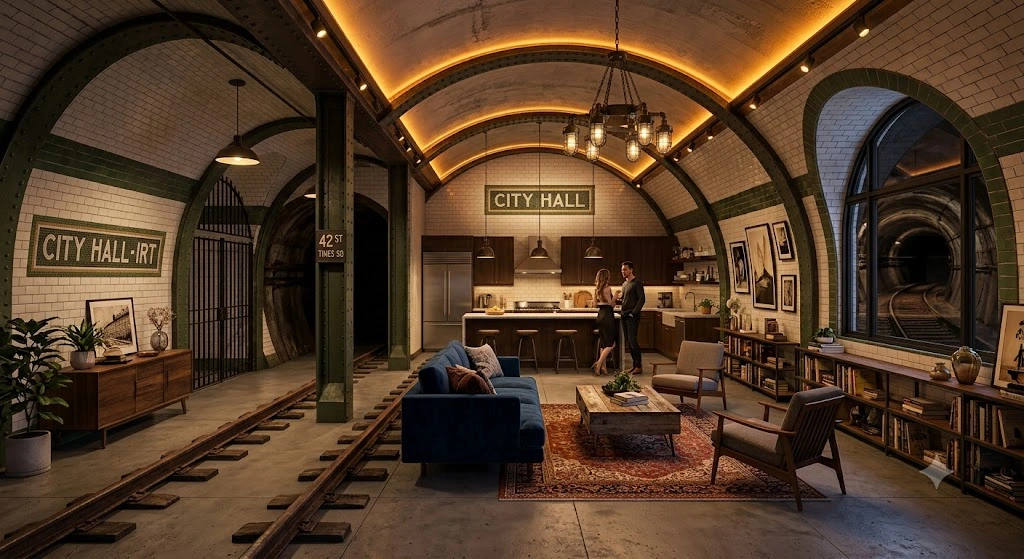
In the hyper-competitive 2026 New York City housing market, developers have officially run out of sky. As luxury penthouses saturate the skyline, the ultra-wealthy are looking in a completely different direction: underground. The latest architectural masterpiece taking the internet by storm is the jaw-dropping transformation of an abandoned NYC subway-adjacent vault into a stunning $2,000,000 subterranean apartment.
This unique property redefines the concept of adaptive reuse. By taking a forgotten piece of early 20th-century transit infrastructure and blending it with ultra-modern smart home technology, developers have created a one-of-a-kind sanctuary. This subterranean loft commands a staggering $2,500 per square foot, proving that natural sunlight is no longer a strict requirement for luxury living.
In a city of eight million people, true luxury is absolute silence and invisibility. This underground conversion offers a level of privacy that not even a billionaire's penthouse can provide.
1.The Ultimate Adaptive Reuse Project
While active transit lines belong strictly to the MTA, the labyrinth beneath Manhattan is filled with decommissioned utility vaults, forgotten 1904 architectural arches, and abandoned caretaker spaces. Transforming these historical oddities into residential real estate is a monumental challenge due to strict city zoning laws.
However, the payoff is spectacular. The developers of this $2,000,000 apartment preserved the original Guastavino ceramic tile ceilings—the same architectural signature found in the famous abandoned Old City Hall station—while gutting the industrial floor plan to create a sprawling, open-concept living space. Preserving these century-old structural elements accounted for nearly 40% of the total renovation budget.
Project Specifications
- Location: Secret subterranean vault in Lower Manhattan.
- Estimated Value: $2,000,000.
- Price per Square Foot: $2,500, rivaling luxury high-rises.
- Key Feature: Original 1904 structural steel and ceramic tile arches.
2.Engineering the Underground
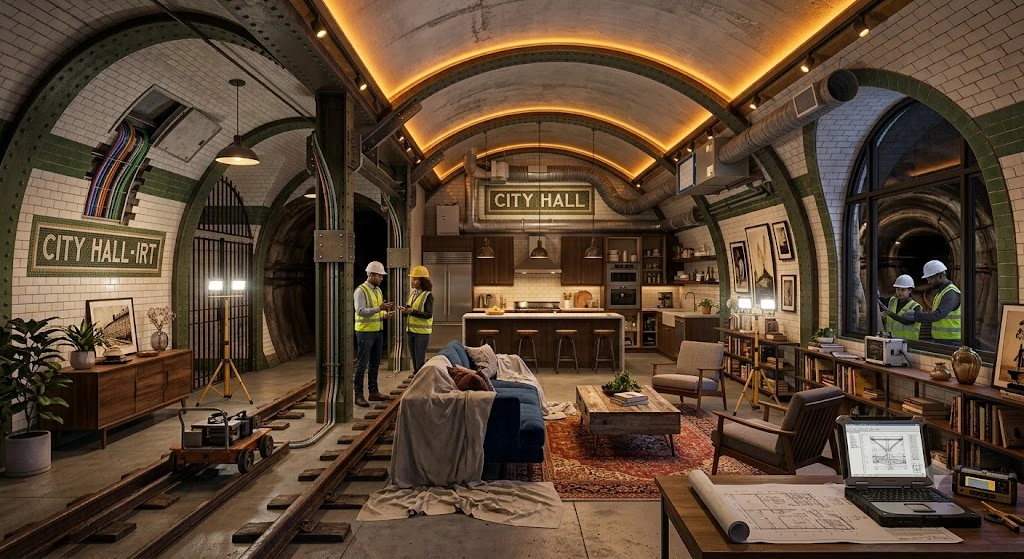
Living directly beneath the bustling streets of New York City requires aggressive engineering. The primary concern for an underground apartment is vibration and noise from the active transit network. To counter this, the entire living space is built within a floating acoustic shell, isolated from the bedrock by massive neoprene shock absorbers.
Furthermore, the absence of windows demanded innovative lighting solutions. The apartment utilizes an advanced circadian LED lighting grid that perfectly mimics natural daylight, transitioning from a bright morning hue to a warm sunset glow. This artificial sunlight system prevents sensory deprivation and costs upwards of $150,000 to install.
3.Privacy is the New Penthouse
Why would an ultra-high-net-worth individual choose to live in a windowless bunker rather than a glass tower? In 2026, the answer is "stealth wealth." According to the National Association of Realtors (NAR), there is a surging demographic of luxury buyers who prioritize absolute invisibility over scenic views.
A subterranean apartment offers uncompromised security. There are no windows for drones or paparazzi to peek through, and the entrance is completely unassuming from the street level. For high-profile celebrities or tech executives, this degree of absolute anonymity is easily worth the $2,000,000 price tag.
If you are investing in unconventional adaptive reuse spaces, ensure the property possesses a legally verified Certificate of Occupancy for residential use. Illegal commercial conversions will instantly void your insurance policies.
4.The Financing Nightmare
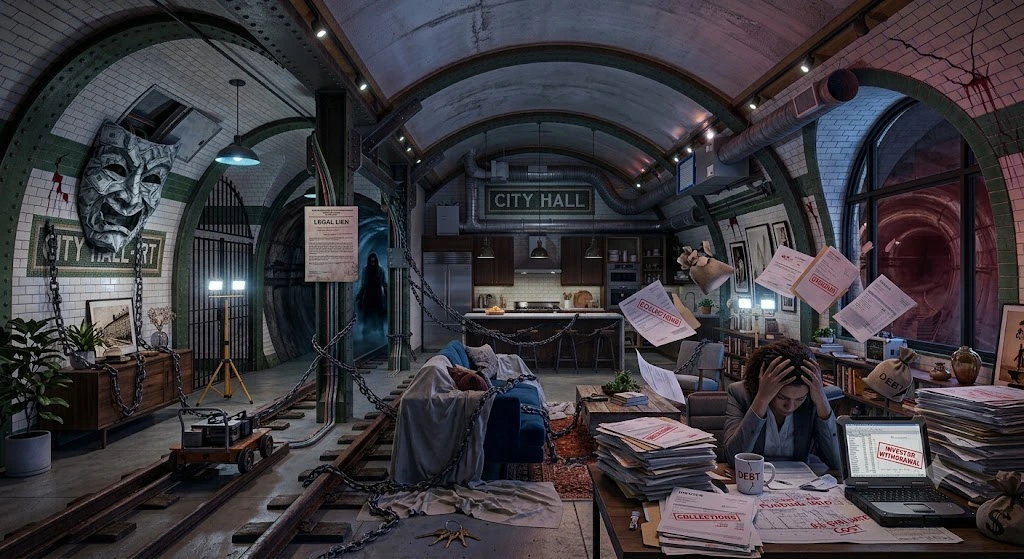
Acquiring a property this unique is a logistical challenge. Traditional mortgage lenders rely heavily on comparable sales (comps) to approve a loan. Because there are virtually no other subway station apartments in the country, appraisers cannot easily value the property.
Guidelines from Freddie Mac generally restrict conventional financing for highly unusual structures. Consequently, buyers of these exotic adaptive reuse projects must rely on private portfolio lenders, or more commonly, execute an all-cash transaction. Market data reveals that over 85% of ultra-niche luxury properties in 2026 are purchased entirely in cash.
The Air Quality Factor: Subterranean living requires hospital-grade air filtration. The HVAC system in this apartment continuously cycles and scrubs the air with HEPA filters, ensuring the interior environment is significantly cleaner than the street-level Manhattan air.
5.The Future of NYC Real Estate
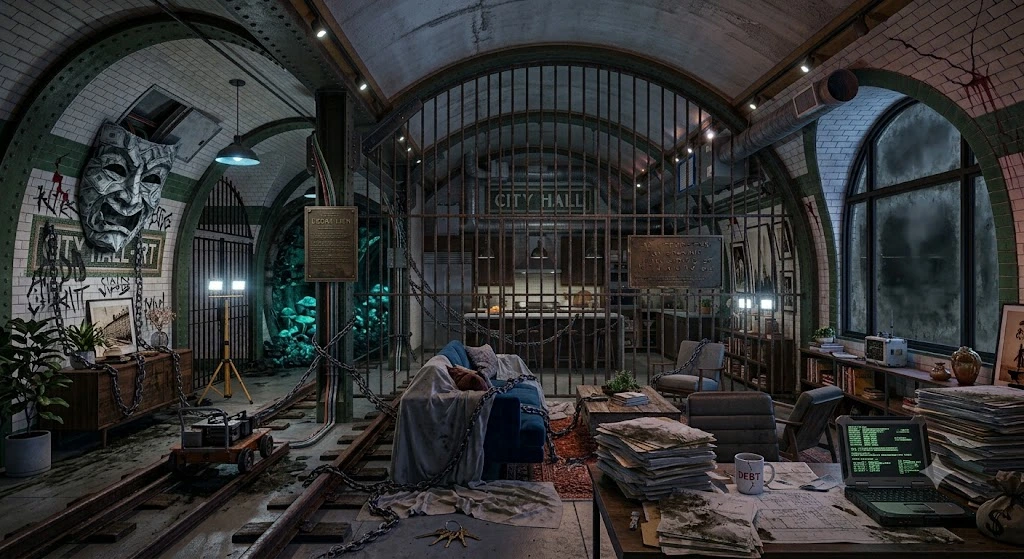
The successful conversion of a subway-adjacent space into a $2,000,000 luxury residence sets a fascinating precedent. As prime real estate in Manhattan and Brooklyn becomes increasingly scarce, developers in 2026 are actively hunting for other forgotten infrastructure—from old aqueducts to bridge anchorages—to flip into exclusive residential art pieces.
While most buyers will stick to traditional condos, the allure of owning a piece of hidden history is undeniable. Explore the fascinating world of luxury real estate and discover unique investment opportunities on Imnoba today, where expert agents can help you navigate even the most complex property acquisitions.
Tags
Sources
- Zillow Research - Luxury Real Estate and Adaptive Reuse 2026 (zillow.com/research)
- NAR - High-Net-Worth Buyer Demographics (nar.realtor)
- MTA - Historic Transit Infrastructure (mta.info)
- Freddie Mac - Non-Traditional Property Financing (freddiemac.com)
- Architectural Digest - Subterranean Design Trends (architecturaldigest.com)