Equipo Inmoba – March 29, 2026
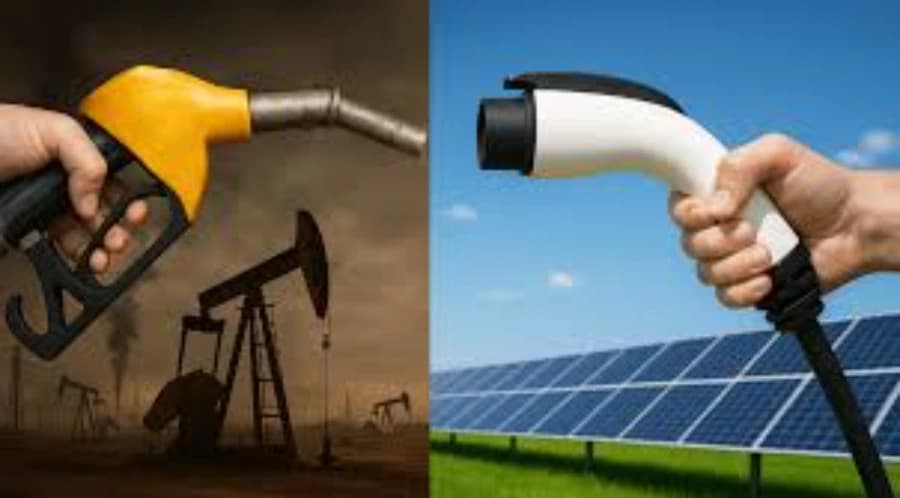
If filling up your tank feels more expensive lately, you’re not imagining the pressure. As spring travel ramps up across the U.S., fuel demand typically rises — and that puts fresh focus on what it really costs to drive every week. For many households in 2026, this is the moment they start seriously comparing gas vehicles with electric ones.
The shift isn’t just emotional. When fuel costs climb, even temporarily, drivers begin recalculating their total cost of ownership — not just the sticker price. Tools like the official FuelEconomy.gov comparison tool and data from the U.S. Energy Information Administration make it easier to see how fuel spending adds up over time.
What’s driving the conversation in 2026
- 1. Spring travel season increases gasoline demand in the U.S.
- 2. Drivers are more sensitive to weekly fuel spending than long-term projections.
- 3. Automakers are highlighting potential EV operating savings.
- 4. Online cost comparison tools are seeing renewed interest.
1.Why Gas Prices Feel Like a Bigger Deal in 2026
Fuel costs hit differently because they’re visible and frequent. You might finance a car once every few years, but you pay for gas every week. When those weekly totals creep up, households quickly feel the squeeze. According to historical tracking from the EIA, seasonal swings are common — but perception often drives buying behavior more than long-term averages.
Before assuming prices will keep rising, check official trend charts from EIA and look at regional averages. Short-term spikes don’t always mean a permanent shift.
Practical check: Look at your last three months of fuel spending in your banking app. That real number matters more than headlines.
When drivers see a noticeable jump in monthly fuel expenses, even modest changes can trigger a deeper evaluation: would switching to electricity stabilize costs, or at least make them more predictable?
2.The Real Cost Comparison: EV vs Gas in Everyday Driving
This is where the math gets interesting. Gas vehicles tie your costs to fuel prices. Electric vehicles shift most of that spending to electricity rates. The Department of Energy Alternative Fuels Data Center explains how energy costs per mile can vary by state, depending on local utility prices.
Use official calculators to estimate annual fuel or electricity spending based on your ZIP code and driving habits. Don’t rely on national averages.
Smart move: Compare vehicles in the same size and performance category. Mixing a compact EV with a large gas SUV will distort the results.
The real tipping point often appears when you calculate cost per mile over several years, not just the purchase price. That’s where rising fuel expenses can change the equation.
3.How Automakers Are Framing the Savings Angle
Manufacturers are leaning into operating cost comparisons in 2026 marketing campaigns. Instead of focusing only on performance or tech features, many are emphasizing reduced fuel spending and simplified maintenance.
When reviewing advertised savings, check what assumptions are used: annual miles driven, fuel price estimates, electricity rates, and maintenance intervals.
Questions to verify in any savings claim
- 1. What fuel price assumption is being used?
- 2. How many miles per year are calculated?
- 3. Are local incentives included or excluded?
- 4. Does the comparison include maintenance?
Savings can be real — but only if the assumptions match your actual driving patterns.
Useful signal: the evaluation gains massive value when translated directly into cost, risk, and required support.
4.What Still Makes Buyers Hesitate
Even with higher fuel costs, some drivers remain cautious. Common concerns include charging access, upfront price differences, battery longevity, and road trip convenience. The U.S. Department of Transportation provides updates on national charging infrastructure efforts, but availability still varies by region.
Map nearby public chargers and confirm home charging feasibility before making a decision. Infrastructure confidence reduces long-term stress.
Reality check: If you primarily drive short daily commutes and can charge at home, range anxiety may be less relevant than you think.
For some households, the hesitation isn’t about fuel anymore — it’s about lifestyle fit. That’s a different calculation entirely.
5.Is This a Short-Term Reaction or a Lasting Shift?
Historically, spikes at the pump tend to accelerate EV interest — but not every spike creates a permanent behavior change. What makes 2026 notable is how quickly consumers can access cost comparison data and financing options online.
Watch whether interest remains strong even if gas prices stabilize. Sustained demand over several months signals something more structural.
Signals of a deeper transition
- 1. Consistent EV search activity even when fuel prices ease.
- 2. Dealership inventory shifts toward electric models.
- 3. Expansion of charging infrastructure commitments.
- 4. Consumer focus on long-term operating stability.
If drivers continue prioritizing predictable operating costs over short-term fuel swings, the shift could extend beyond a seasonal reaction.
Practical takeaway: usefulness starts exactly when abstract topics become real decision tools.
6.What to Calculate Before You Make the Switch
Before deciding, break the choice into numbers you can verify: annual miles driven, average fuel spending, local electricity rates, insurance quotes, and resale expectations. Official tools from FuelEconomy.gov and infrastructure data from the Alternative Fuels Data Center can ground your estimates.
Run at least two scenarios: current fuel prices and a lower-price scenario. That stress test shows how sensitive your decision is to market swings.
When the numbers are personalized, the answer becomes clearer — and far less influenced by headlines.
Useful signal: the evaluation gains massive value when translated directly into cost, risk, and required support.
Useful checks for this section
- Confirm the detail that most changes cost, use case, or risk.
- Prioritize original sources over recycled summaries when details conflict.
- Translate the topic into a real scenario before deciding.
Conclusion
Rising fuel costs in 2026 are clearly pushing more Americans to reconsider their options. For some, this will be the tipping point toward electric driving. For others, it’s simply a reminder to calculate total ownership costs more carefully. The smartest move isn’t reacting to one price spike — it’s understanding your real driving expenses and choosing the setup that protects your budget over time.
Etiquetas
Fuentes consultadas
- U.S. Energy Information Administration. (2026). Gasoline and diesel fuel update.
- U.S. Department of Energy. (2026). Alternative Fuels Data Center.
- FuelEconomy.gov. (2026). Compare vehicles and estimate annual fuel costs.
- U.S. Department of Transportation. (2026). Transportation infrastructure resources.