Imnoba Team – March 19, 2026
If you are shopping in 2026, the most important shift is this: sticker price alone is a weak guide, and the incentive landscape is not what many buyers still assume. The real financial winner between an electric vehicle and a hybrid depends on how you drive, where you charge, how long you keep the car, and what recurring costs hit after purchase.
That makes this a much more practical decision than a trend decision. For some drivers, a battery-electric vehicle still produces stronger long-term savings. For others, a hybrid ends up being the smarter money choice because it reduces fuel cost without forcing changes in charging routine, road-trip planning, or home installation.
Below is the clean comparison that actually matters in 2026: purchase cost, incentives, charging or fuel cost, maintenance, insurance, resale, and lifestyle fit. If you compare all of those on the same baseline, the better answer usually becomes much clearer.
What actually decides the winner
- 1. Upfront price after any incentive that truly applies in 2026.
- 2. Home charging access and your real electricity rate.
- 3. Gas usage and annual mileage in a hybrid scenario.
- 4. Maintenance, warranty, and repair exposure over several years.
- 5. Insurance, depreciation, and resale timing.
1.Upfront Price in 2026: The Incentive Story Is Not What Many Buyers Think
The first big correction for 2026 is incentive-related. The IRS says the New Clean Vehicle Credit is available only for vehicles acquired on or before September 30, 2025, and the Used Clean Vehicle Credit is also not available for vehicles acquired after that same date. That means many 2026 EV buyers can no longer assume a federal purchase credit will narrow the gap.
That change matters because it alters the entry-cost equation immediately. A hybrid may now look stronger upfront simply because it often starts at a lower price and does not depend on a disappearing federal buyer credit to make the numbers work. At the same time, EV buyers may still have a related incentive path if they install charging equipment and qualify under current rules.
Before comparing vehicles, decide whether your 2026 purchase actually qualifies for any federal incentive. Do not build your decision around a tax credit just because older articles still mention it.
In 2026, one of the easiest ways to get the EV-vs-hybrid decision wrong is to compare real hybrid pricing against an EV price that assumes a federal vehicle credit that may no longer apply.
What to verify before you compare upfront cost
- 1. Whether the vehicle purchase itself qualifies under current IRS clean vehicle rules.
- 2. Whether a home charger or charging equipment may still qualify for an incentive through the DOE AFDC tax credit hub.
- 3. Dealer fees, delivery charges, taxes, and optional add-ons.
- 4. The real financed total, not just the advertised monthly payment.
2.Charging vs. Gas: The Monthly Cost Gap Depends on Your Real Routine
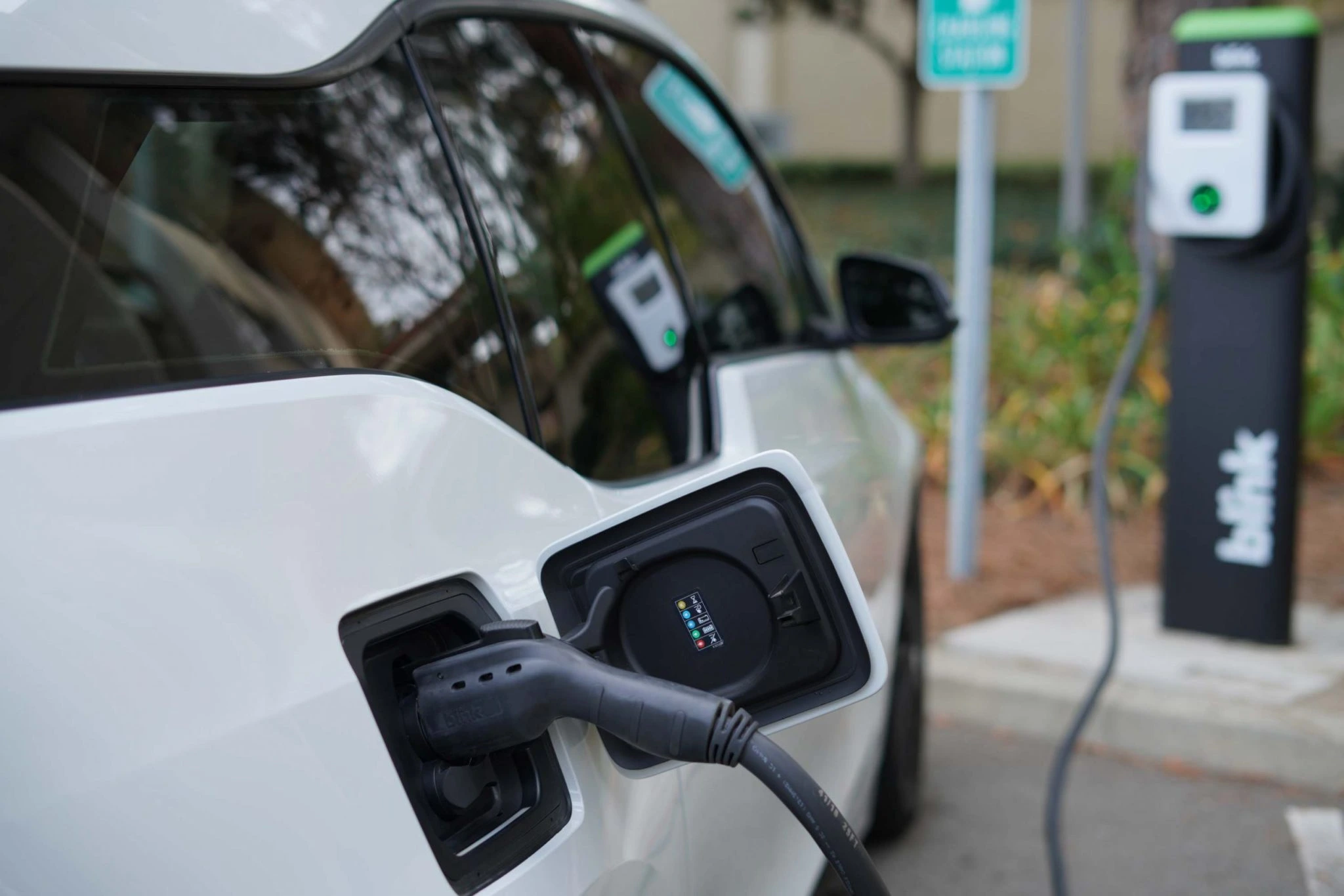
This is where the comparison gets more personal. An electric vehicle can look dramatically cheaper to operate if you charge mostly at home and your utility rate is reasonable. A hybrid still lowers fuel spending versus a conventional gasoline vehicle, but it cannot usually match the lowest per-mile cost of home charging when conditions are favorable.
The catch is that public charging can narrow that gap. The DOE/EPA FuelEconomy.gov comparison tools and the AFDC home charging guidance are especially useful here because they help separate ideal savings from the savings you are actually likely to experience. If you rely heavily on public fast charging, the EV’s monthly advantage may shrink. If you charge mainly at home, the EV case often strengthens.
Use your own last 12 months of driving, not a generic annual average. Estimate cost with your utility rate, your expected home/public charging split, and realistic gasoline spending for the hybrid you are considering.
What to verify before calling one option cheaper to run
- 1. Your real electricity price per kWh from your utility bill.
- 2. The exact vehicle’s official efficiency using FuelEconomy.gov.
- 3. Whether you will charge mostly at home, work, or public stations.
- 4. Average local fuel cost and your actual annual mileage.
A fully electric vehicle often wins hardest when you drive consistently and charge at home. A hybrid becomes more competitive when charging is inconvenient, expensive, or unpredictable.
3.Maintenance and Warranty: Simpler Does Not Always Mean Easier

Electric vehicles usually carry the cleaner maintenance story. They do not need oil changes, generally have fewer moving parts, and often reduce brake wear through regenerative braking. That gives EVs a real advantage in routine service complexity.
Hybrids sit in the middle. They can save fuel effectively, but they still include an internal combustion engine plus electrified components. That means you are not escaping engine-related maintenance entirely; you are combining two systems in one ownership experience.
Download the manufacturer’s official warranty booklet and compare battery coverage, powertrain coverage, and maintenance schedules side by side before assuming which one is cheaper long term.
Routine maintenance often favors EVs. Flexibility and repair familiarity often favor hybrids. The better financial choice depends on which tradeoff matters more in your ownership window.
One more check matters here: verify safety campaigns and recalls on the exact model using the NHTSA recalls database. Savings on paper are less useful if the vehicle carries unresolved issues or support complexity that you failed to screen before buying.
4.Insurance, Depreciation, and Resale: The Quiet Costs That Change the Result

A lot of buyers compare EV and hybrid costs too narrowly and miss the categories that move slower but hit harder. Insurance can differ because of vehicle value, repair cost, parts pricing, and model-specific risk. Depreciation can differ because of brand strength, production levels, consumer demand, and how confident the market feels about used battery technology.
That means a vehicle that looks cheaper to operate each month may still lose ground if its insurance is materially higher or if it gives back more value at resale. The reverse is also true: a slightly more expensive vehicle to buy can still win if it holds value better and remains cheaper to insure.
Get written insurance quotes for both vehicles with the exact same coverage, then check resale listings for equivalent past model years before deciding which one saves more money.
The right comparison base here
- 1. Match coverage limits exactly when quoting insurance.
- 2. Compare resale using similar trim, age, and mileage.
- 3. Treat depreciation as part of cost, not as an afterthought.
- 4. Avoid comparing a high-demand EV against a weaker hybrid or vice versa unless equipment and market position are truly similar.
If you compare operating cost but ignore resale and insurance, you are only comparing half the decision.
5.Your Driving Pattern Decides More Than the Technology Badge

This is the section most shoppers should read twice. The financial winner depends heavily on how you actually live. Short daily commuting with home charging often strengthens the EV case. Frequent long-distance driving without dependable charging access often strengthens the hybrid case. Neither result is ideological. It is operational.
The AFDC station locator and public charging resources help you measure whether the battery-only lifestyle fits your routes. If reliable charging exists near home, work, and regular destinations, an EV has a stronger savings path. If not, the hybrid’s flexibility can protect both time and money.
Map your weekly routine before you choose the technology. Count where you park, how long you park, and how often you would realistically need public charging.
A vehicle can be technically efficient and still be the wrong financial choice if it does not fit your daily pattern.
Questions that usually reveal the answer faster
- 1. Do you have reliable home charging or a realistic home-charger plan?
- 2. How often do you take highway or long-distance trips?
- 3. Would you be comfortable depending on public charging several times a month?
- 4. Do you value the lowest running cost more than maximum fueling flexibility?
6.Build a Real Side-by-Side Comparison Before You Sign Anything

The best 2026 comparison is not national, generic, or emotional. It is personal and documented. Build one sheet using real dealer pricing, your expected annual mileage, your electricity rate, hybrid fuel cost, insurance quotes, charger installation cost if needed, and a conservative resale estimate.
| Cost Category | Electric | Hybrid |
|---|---|---|
| Purchase price | Vehicle price after any 2026-eligible incentive | Vehicle price with no assumed EV-only rebate advantage |
| Energy or fuel | Electricity cost based on home/public charging mix | Gasoline cost based on real MPG and local prices |
| Maintenance | Fewer routine engine-related services | Lower fuel use but still engine plus hybrid-system maintenance |
| Infrastructure | Possible home charger and installation cost | Usually no charger-installation cost |
| Insurance and resale | Must be quoted and projected directly | Must be quoted and projected directly |
Run two scenarios: one optimistic and one conservative. If the EV only wins under ideal assumptions, the hybrid may be the safer money choice. If the EV still wins under conservative assumptions, that is a much stronger signal.
A serious comparison does not ask which one sounds cheaper. It asks which one still looks better after your own numbers make the decision harder.
7.So Which One Usually Saves More in 2026?
In 2026, a fully electric vehicle usually saves more when you have dependable home charging, consistent annual mileage, strong expected use of the battery-only platform, and no unrealistic dependence on an expired federal purchase credit. A hybrid usually saves more when upfront budget matters more, long-distance flexibility is essential, and charging access is uncertain or inconvenient.
Do not ask which technology is better in general. Ask which one leaves you with the lower total cost after purchase, energy, maintenance, insurance, infrastructure, and resale are all counted on the same timeline.
Conclusion
There is no universal winner in 2026. The most honest answer is that electric beats hybrid for some households and hybrid beats electric for others. What changed this year is that the decision leans less on a broad federal EV tax-credit assumption and more on your charging reality, your cost structure, and your ownership plan. The smartest move is simple: compare both on the same baseline, use official tools, and let your real numbers decide.
Tags
Sources
- Internal Revenue Service. (2025). Clean vehicle tax credits and 2025-2026 eligibility updates.
- Internal Revenue Service. (2025). Used clean vehicle credit eligibility update.
- Internal Revenue Service. (2025). Clean vehicle credit expirations under updated federal law.
- U.S. Department of Energy - Alternative Fuels Data Center. (2025). Tax credits for electric vehicles and charging infrastructure.
- FuelEconomy.gov. (consulta vigente). Official U.S. Department of Energy and EPA vehicle efficiency and comparison tools.
- U.S. Department of Energy - Alternative Fuels Data Center. (consulta vigente). Home charging guidance for electric vehicles.
- U.S. Department of Energy - Alternative Fuels Data Center. (consulta vigente). Electric vehicle charging station locator.
- National Highway Traffic Safety Administration. (consulta vigente). Official recalls database.