Imnoba Team – March 21, 2026
Dropping $45,000+ on a new vehicle this year? If you are thinking about going electric in 2026, the game has officially changed. We are seeing longer ranges, lightning-fast charging, and interiors that finally make sense for families. But let's be brutally honest: the shiny badge on the hood matters far less than how this SUV handles your daily commute, your weekend road trips, and your long-term bank account. A 300-mile promised range means nothing if it doesn't fit your real life.
Instead of falling for dealership hype, this guide is your blueprint on how to compare electric SUVs the right way. We are diving into the gritty details: the 20% winter range drop, the true cost of installing a Level 2 home charger, and what really happens to resale value on top vehicle platforms. Want to make a bulletproof investment? Let’s do the math.
Your 4-Step Checklist Before Comparing Models
- 1. Never trust the brochure blindly: Always verify the EPA-rated range on [FuelEconomy.gov](/como-medir-consumo-real) to ensure every SUV is measured on the exact same baseline.
- 2. Chase the money: Check the official U.S. Department of Energy site to see if that SUV qualifies for the $7,500 federal tax credit at the point of sale.
- 3. Safety first: Verify crash ratings and active recalls directly at [NHTSA.gov](/seguridad-vehicular-2026).
- 4. The 8-Year Rule: Read the fine print. The gold standard is an 8-year/100,000-mile battery warranty retaining at least 70% capacity.
1.Range Anxiety is Dead: But Only if You Do the Math
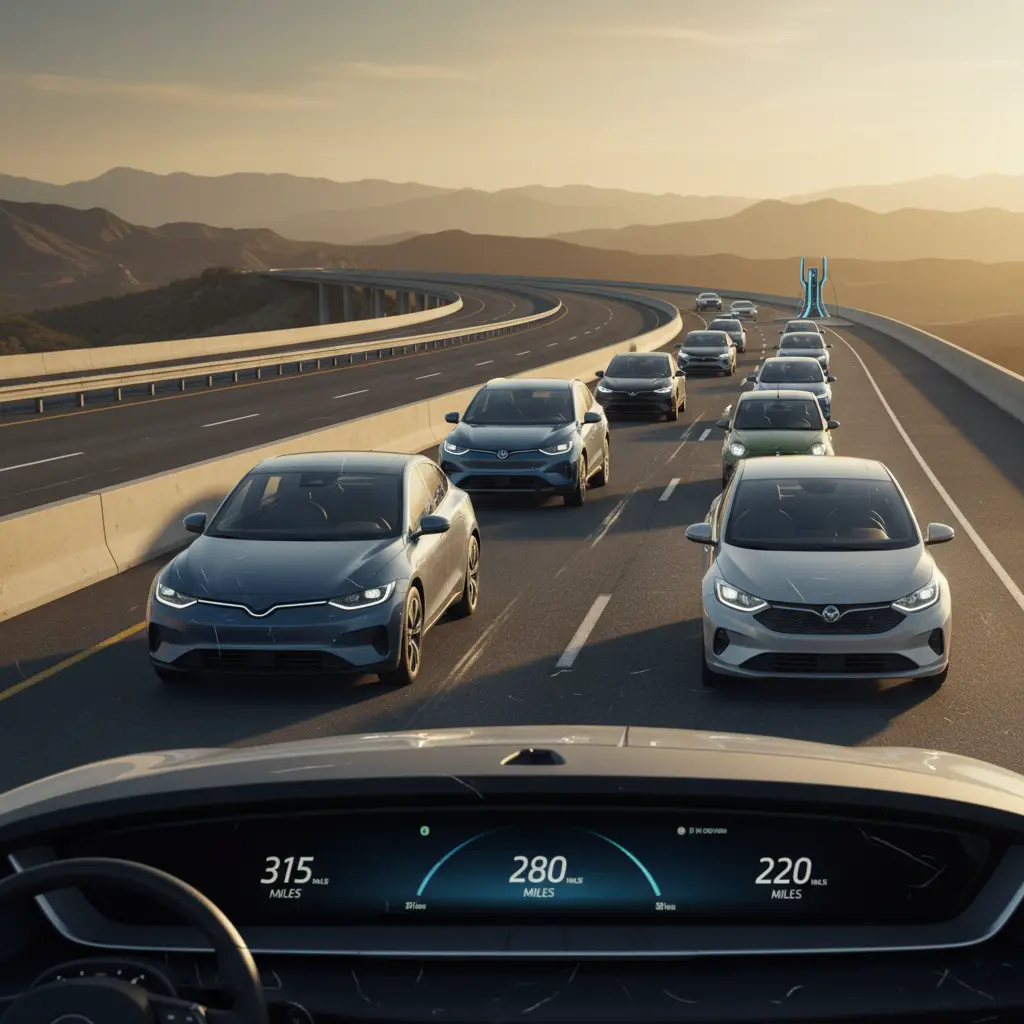
For 2026 buyers, the EPA-estimated range is just a starting point, not a promise. Highway speeds (driving 75 mph vs 55 mph), having a full family inside, and cranking the heater in December can slash your range by 15% to 20%. If an SUV claims 320 miles of range, plan for a reliable 250 miles during a winter road trip. Build a practical buffer so you never sweat looking for a plug.
Pro Tip: If your frequent weekend getaway is 180 miles away, do not buy an SUV with a 220-mile range. Aim for 280+ miles to account for highway drain and avoid forced charging stops with crying kids in the back.
The Reality Check: Map your most common long trip using apps like A Better Routeplanner (ABRP) before you buy. If the charging infrastructure on that specific route is terrible, reconsider your model.
While the Supercharger network is opening up to more brands in 2026, compatibility still requires specific adapters for many SUVs. Always confirm what native plug the car uses (NACS vs CCS) and what charging networks dominate your local highways.
2.Family Space: Moving Beyond 'Cubic Feet' Illusions

If you are transitioning from a compact gas SUV, you are in for a treat. Thanks to the lack of a transmission tunnel, electric SUVs offer completely flat floors and massive center console storage. However, a "65-cubic-foot" trunk on paper can be useless if the roofline is steeply sloped. Two vehicles can look identical in specs but fail the real-world stroller test.
Do not be shy at the dealership: physically bring your bulky double stroller, golf clubs, or largest travel bag. Test the trunk yourself. If it doesn't fit effortlessly, walk away.
The 3-Row Trap: Many mid-size electric SUVs advertise 3 rows, but with all 7 seats up, you are left with a tiny 12-cubic-foot trunk (barely enough for groceries). Always check the space with all seats deployed!
What Every Parent Should Verify
- 1. Frunk space: Does it have a front trunk big enough for charging cables and muddy gear, or is it a useless plastic bin?
- 2. Kid-friendly tech: Look for accessible ISOFIX anchors, rear-seat climate zones, and dedicated 45W USB-C ports.
- 3. Hands-free practicality: A kick-sensor tailgate is mandatory when your hands are full of groceries.
- 4. Acoustic glass: EVs are quiet, making wind noise obvious. Ensure the SUV has dual-pane acoustic glass for a silent cabin.
Comfort isn't just space; it's ride quality. The heavy battery pack in an EV can make the ride stiff. A test drive over local potholes will tell you more about the suspension than any YouTube review.
3.The Real Price Strategy: MSRP vs. What You Actually Pay
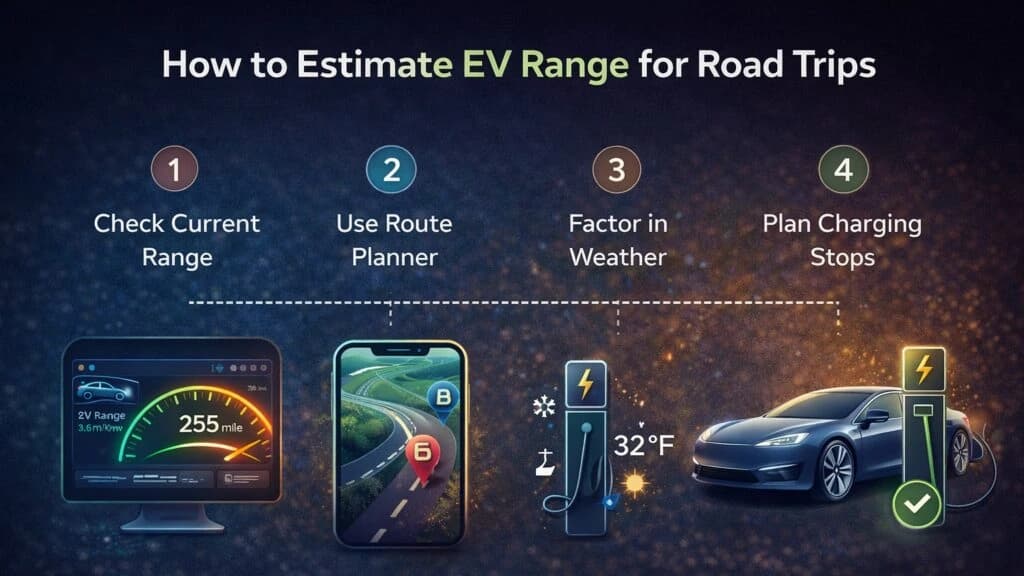
Do not let a $55,000 sticker price scare you, and do not let a $39,000 price tag fool you. You must calculate the Total Cost of Ownership (TCO). When you factor in the $7,500 point-of-sale tax rebate, zero oil changes, and charging at home for $0.12/kWh, a more expensive EV can actually cost you less per month than a cheaper gas-guzzler.
Always get an insurance quote BEFORE signing. EVs can be up to 20% more expensive to insure because their battery packs are costly to replace after a collision.
| Cost Factor | The 2026 Reality | Financial Impact |
|---|---|---|
| Fuel vs. Charging | $150/month (Gas) vs. $40/month (Home EV Charge) | Over 5 years, this saves you roughly $6,600. |
| Tax Incentives | Up to $7,500 off the MSRP instantly | Strict rules apply based on battery sourcing and your income. |
| Tire Wear | EVs chew through tires 20% faster | Heavy batteries + instant torque = budget for new tires sooner. |
Resale Value Alert: Data from major vehicle platforms shows that tech-forward EVs with ranges above 300 miles hold their value significantly better than entry-level, low-range models.
Avoid comparing a fully loaded EV with a base-model gas car. Compare equivalent trims to get a clear picture of the premium you are actually paying to go electric.
4.Charging Realities: Home Setup vs. Highway Speed

Here is the biggest secret of EV ownership: 90% of your charging will happen while you sleep. A Level 2 home charger is non-negotiable for an SUV. Plugging into a standard 110V wall outlet will give you a painful 3 miles of range per hour. A proper 240V Level 2 setup will fully charge a massive SUV battery overnight.
Budget between $800 and $1,500 for home charging. The charger hardware is about $400-$600, but paying a licensed electrician to run wiring to your garage will cost another $500-$900 depending on your electrical panel.
The 10-80% Metric: For road trips, ignore the "full charge time." Look for how fast the SUV charges from 10% to 80% on a DC Fast Charger. The best 2026 models do this in 18 to 22 minutes.
Charging Specs That Actually Matter
- 1. Peak Charging Rate: An SUV that accepts 250kW+ will charge dramatically faster than one capped at 150kW.
- 2. Charging Curve: Does it hold that peak speed for a long time, or drop off immediately?
- 3. Battery Preconditioning: Crucial feature. The car automatically warms the battery as you navigate to a charger, slashing charging times by up to 30%.
A vehicle with a slightly smaller battery but a blazing-fast 800-volt charging architecture is often a better road-trip machine than an SUV with a huge, slow-charging battery.
5.Safety Tech, Warranties, and Post-Purchase Support

By 2026, Advanced Driver Assistance Systems (ADAS) are practically standard. But there is a huge difference between a basic lane-keep assist that violently pings you, and a smooth, radar-based highway driving assist that genuinely reduces fatigue in stop-and-go traffic. Test the adaptive cruise control heavily during your test drive.
Read the battery warranty carefully. Ensure it guarantees a replacement if the battery degrades past 70% capacity within 8 years or 100,000 miles. Also, check if that warranty transfers to a second owner—huge for resale value!
What to Verify Before Signing the Contract
- 1. OTA Updates: Does the SUV receive Over-The-Air software updates to improve range and tech, or do you have to visit a dealer?
- 2. Service Network: Buying a startup EV brand is cool until you need a repair and the nearest service center is 3 states away.
- 3. Roadside Assistance: Confirm if flat-bed towing specifically for EVs is included in the warranty package.
A strong dealer and service network is your safety net. The most advanced electric SUV on the market becomes a massive headache if you can't get replacement parts or software bugs fixed quickly.
6.How to Build a Shortlist That Actually Fits Your Life

The Golden Rule of EV Shopping: Measure every option against your average Tuesday, not your hypothetical once-a-year cross-country road trip.
Your Clean Comparison Baseline
- 1. Filter first by Federal Tax Credit eligibility to see your true budget.
- 2. Set a hard minimum for real-world range (e.g., must be over 270 miles EPA).
- 3. Cross-reference your top 3 picks with your insurance broker.
- 4. Do the Stroller/Golf Club test at the dealership to finalize.
This is where the magic happens. Once you strip away the massive infotainment screens and the 0-60 mph gimmicks, the shortlist becomes crystal clear. You stop guessing and start investing in a vehicle that genuinely upgrades your daily routine.
Final Take: Choose the Electric SUV That Fits Your Bank Account and Routine
Going electric in 2026 is the smartest automotive move you can make—if you buy the right car. By comparing electric SUVs using a realistic range buffer, actual trunk usability, confirmed tax incentives, and home charging costs, you eliminate the buyer's remorse. Do the math, test the tech, and drive off the lot knowing you just made a bulletproof financial and family decision.
Tags
Sources
- U.S. Department of Energy. (2026). Electric vehicle tax credit guidance and comparison resources.
- Alternative Fuels Data Center. (2026). Home charging cost analysis and federal incentive updates.
- Environmental Protection Agency (EPA). (2026). Official Fuel economy ratings and EV efficiency data.
- National Highway Traffic Safety Administration (NHTSA). (2026). Vehicle safety ratings and recall information.
- Major EV manufacturers. (2026). Official warranty and specification pages.