Equipo Inmoba – June 19, 2026
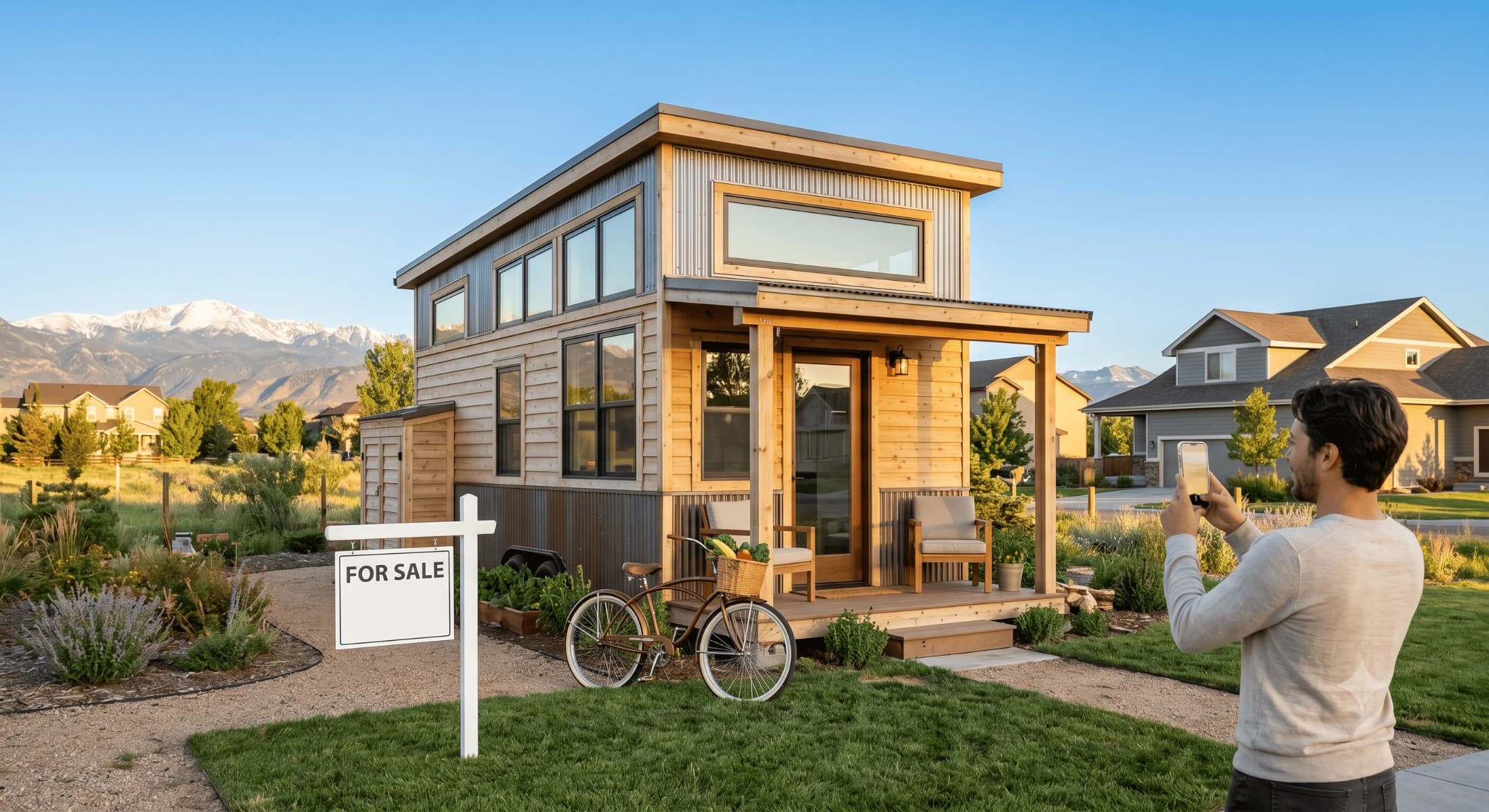
The concept of downsizing was originally born out of a desire for financial freedom and minimalism. However, searching for the smallest house for sale in America right now reveals a housing market that has completely distorted the original tiny home dream. In 2026, finding a microscopic footprint no longer guarantees a microscopic price tag; in fact, it often means paying a massive premium for the sheer novelty of the property.
What started as a quirky architectural movement has transformed into a high-stakes real estate commodity. Across the country, properties smaller than a standard two-car garage are hitting the market with asking prices that rival traditional suburban family homes, proving that the cost per square foot for tiny homes has surged by 45% since the post-pandemic era.
A 576-square-foot property in Fort Collins recently sat on the market for an astounding $315,000, forcing buyers to completely recalibrate their expectations of affordable housing.
1.The $315,000 Shoebox in Colorado
To understand this wild pricing phenomenon, we have to look at specific listings that have gone viral. According to recent data pulled from Zillow, a minuscule 576-square-foot home located in Fort Collins, Colorado, recently hit the market with an asking price of $315,000. The home features just two cramped bedrooms and a single bathroom, yet it demands a luxury-level financial commitment.
While the property does offer a detached garage and updated electrical wiring, the sheer math is staggering. Buyers are essentially paying over $546 per square foot, a valuation that completely shatters the historical pricing models tracked by the National Association of Realtors (NAR) for the Midwestern and Mountain states.
The Fort Collins Micro-Home Stats
- Total Living Space: 576 sq ft.
- Listing Price: $315,000.
- Price Per Square Foot: $546.
- Days on Market: Over 64 days, indicating extreme buyer hesitation.
2.The Tennessee Park Model Phenomenon
Colorado isn't the only state where tiny homes are commanding exorbitant prices. In rural Tennessee, a highly publicized 400-square-foot park model cabin on a one-acre lot recently sparked outrage among homebuyers. Originally listed for an eye-watering $539,000, the property saw multiple price cuts until it settled near the $274,000 mark.
What shocked potential buyers wasn't just the price, but the severe structural limitations. The lofted bedroom in this cabin features a ceiling so low that an adult literally cannot sit up straight in bed. Despite this glaring flaw, the property's proximity to elite institutions and backcountry hiking trails means that investors still view this tiny 400 sq ft box as a premium seasonal rental asset.

3.The True Cost Per Square Foot
The reality of the 2026 market is that you are rarely paying for the physical structure of a tiny house; you are paying for the land it sits on. In areas with strict zoning laws, legally placing a micro-home is incredibly difficult. Municipalities often mandate a minimum of 700 square feet for a permanent foundation, creating an artificial scarcity for legally zoned tiny homes.
Because these properties are incredibly rare and bypass strict building codes through loopholes like being registered as recreational vehicles, sellers can name their price. A standard single-family home in America averages around $220 per square foot, but tiny homes in desirable tourism hubs easily command upwards of $600 per square foot.
Before purchasing any property under 600 square feet, verify with the local county assessor that the structure is legally permitted as a permanent dwelling and not classified as a temporary recreational vehicle.
4.The Financing Nightmare for Micro-Homes
Even if you are willing to pay these shocking prices, actually getting the bank to agree is a completely different battle. Major lenders generally rely on strict comparable sales (comps) to approve a loan. Because tiny homes are rare, appraisers struggle to find similar properties nearby to justify a $300,000 valuation for a 500-square-foot box.
Furthermore, according to guidelines established by Freddie Mac, if a tiny home is built on a trailer chassis, it does not qualify for a traditional 30-year fixed mortgage. This forces buyers into short-term, high-interest personal loans where the average interest rate can easily exceed 10.5%, making the monthly payments incredibly oppressive.
Cash is King: Due to the severe lending restrictions on non-traditional structures, more than 70% of micro-homes sold in the United States in 2026 are purchased with all-cash offers from wealthy investors.

5.Who is Actually Buying These?
If average American families are priced out or denied financing, who is actually buying the smallest houses in America? The primary demographic consists of corporate Airbnb investors and high-net-worth individuals seeking a trendy, low-maintenance weekend retreat. These buyers are entirely focused on the yield generated by short-term vacation rentals.
In heavily trafficked tourist areas, a quirky tiny home can generate significantly more nightly revenue than a standard apartment. An investor paying $315,000 for a micro-home near a major national park can easily achieve a staggering annual return of 12% to 15%, making the outrageous initial purchase price a highly logical business decision.
The Micro-Home Buyer Profile
- Corporate Short-Term Rental Investors: 55%.
- Wealthy Second-Home Buyers: 30%.
- Primary Residence Owners: Only 15%.
- Average Cash Purchase Rate: Over 70%.
6.The Future of the Tiny Home Dream in 2026
The era of building a cute, affordable tiny house in the woods for $40,000 is effectively dead. In its place is a highly commodified, hyper-competitive luxury asset class. The smallest houses for sale in America right now are powerful reminders that real estate values are driven strictly by scarcity, location, and the infinite demand for unique rental experiences.
For traditional homebuyers, this trend is a glaring signal to look past the tiny home hype and focus on standard condos or townhouses that offer better long-term financing options. Explore the verified listings on Imnoba to discover properties that provide true square-footage value without the shocking price tags of the micro-mansion fad.
If you are dead set on living small, consider buying vacant land and building a custom ADU (Accessory Dwelling Unit) instead. This route can easily save you over $100,000 compared to buying a pre-existing tiny home at a massive markup.

Etiquetas
Fuentes consultadas
- Zillow Research - Tiny Home Pricing Trends (zillow.com/research)
- NAR - National Association of Realtors Market Data (nar.realtor)
- Freddie Mac - Non-Traditional Property Financing (freddiemac.com)
- Realtor.com - Active Listings and Square Footage Analytics (realtor.com)
- HUD - Zoning and Accessory Dwelling Unit Guidelines (hud.gov)