
Equipo Inmoba – March 18, 2026
In 2026, investors are becoming more selective about what actually counts as a durable housing market. That is why Charlotte and Atlanta are drawing attention: not because they are the cheapest markets in America, but because they still offer a more workable balance of entry pricing, migration, employment depth, and long-term rental relevance than many higher-cost coastal benchmarks.
The key is not to treat these metros as trend stories. The real advantage appears when purchase price, demand drivers, supply pressure, and financing conditions can still support disciplined underwriting. That is what separates a market with durable investment logic from one that only looks attractive in a headline.
Why these two metros deserve attention in 2026
- 1. U.S. Census Bureau estimates show Atlanta-Sandy Springs-Roswell added 75,134 residents between 2023 and 2024.
- 2. U.S. Census Bureau reported that Charlotte-Concord-Gastonia ranked 11th nationally in annual numeric growth and added more than 61,000 residents.
- 3. BLS showed Charlotte among the strongest large-metro payroll gainers in December 2025.
- 4. Census Building Permits Survey and FRED mortgage data remain essential because growth alone is never enough if supply or debt costs overwhelm returns.
1.Affordability Still Matters, but Only When It Supports Real Investment Math
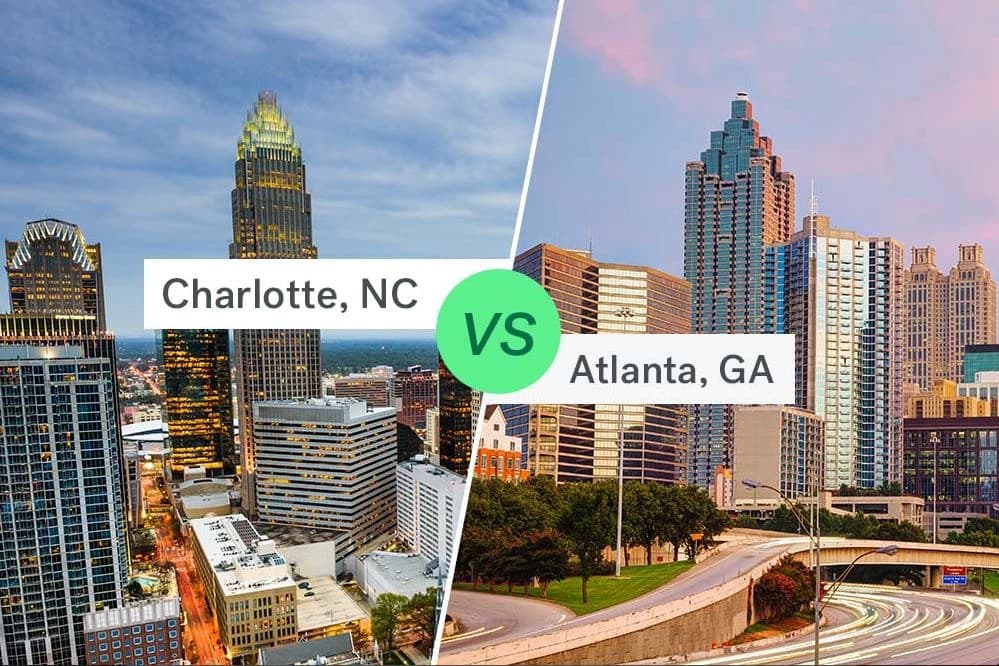
Charlotte and Atlanta continue to stand out because they generally allow for more workable entry assumptions than many high-cost coastal markets. That does not make them cheap. It makes them easier to underwrite without depending entirely on aggressive appreciation. For investors, that distinction matters a lot in a year where balance is more valuable than hype.
Do not compare these metros to national averages alone. Compare them to the coastal markets your capital might otherwise target, then test whether rent, taxes, insurance, and financing still leave a meaningful cushion.
Best filter at this stage: focus on rent-to-price discipline, not on whether a metro simply feels cheaper than the last cycle’s hottest markets.
What to verify before you call a market affordable
- 1. Local household income and housing cost context from the U.S. Census Bureau.
- 2. Real asking-rent ranges by submarket, not metro-wide averages alone.
- 3. County property taxes and insurance pressure.
- 4. Whether your target neighborhood still works if rent growth slows.
That is the real edge in 2026. A market deserves capital not because it is cheaper than New York, Los Angeles, or Miami, but because the purchase still makes sense after conservative rent assumptions and normal operating friction are applied.
2.Why Charlotte Looks Stronger Than a Typical Growth Story

Charlotte’s case is unusually compelling because it is not relying on just one signal. The U.S. Census Bureau reported that Charlotte-Concord-Gastonia added more than 61,000 residents between 2023 and 2024, ranking 11th nationwide in annual numeric population growth. That is a serious demand backdrop, not a social-media narrative.
The labor picture strengthens that story. In the BLS metropolitan employment summary, Charlotte recorded one of the largest over-the-year payroll gains among major metros in December 2025, with a 37,600-job increase and one of the strongest percentage gains in the large-metro group. That combination matters because household formation is much more durable when migration is reinforced by employment depth.
In Charlotte, underwrite by corridor, not by metro branding alone. The strongest story usually appears where population gains, employment access, and rental absorption overlap.
Charlotte’s real advantage is not just growth. It is growth that still looks investable when tested against cash flow and demand durability.
That is why Charlotte stands out in this cycle. It offers one of the rare combinations investors want in 2026: continued in-migration, measurable payroll momentum, and enough remaining room to model returns without forcing the assumptions.
3.Why Atlanta Leads Differently: Scale, Liquidity, and Employment Depth

Atlanta’s strength in 2026 is different from Charlotte’s. It is less about looking like the most explosive momentum market and more about being one of the deepest, most liquid, and most institutionally relevant metros in the Southeast. The U.S. Census Bureau reported that Atlanta-Sandy Springs-Roswell added 75,134 residents between 2023 and 2024, placing it among the top metros nationwide for numeric population growth.
That scale matters because large investment markets do not win only through speed. They also win through depth. The latest BLS Atlanta area employment release placed metro payroll employment at 3,136,200 in June 2025. Even though the headline over-the-year change was not statistically significant overall, education and health services posted a meaningful gain. That is exactly the kind of broad-base support investors should care about in a balance-focused cycle.
Treat Atlanta as a metro of submarkets, not a single thesis. The investment case changes materially between close-in urban nodes, established suburban counties, and outer-ring growth corridors.
Atlanta leads less by looking cheap and more by offering scale, liquidity, diversified demand, and multiple ways to position capital.
That makes Atlanta especially relevant for investors who value resilience over dramatic one-year upside. In 2026, that tradeoff looks smarter than it did in the more speculative phases of the cycle.
4.Rent Growth Only Matters If Supply Does Not Overrun It

This is where many bullish market takes fall apart. Strong migration and employment do not automatically translate into easy rent growth if the local supply pipeline is heavy. The Census Building Permits Survey is one of the most useful official tools here because it lets investors track permit activity by CBSA and see whether new supply is likely to compete with existing rentals.
Before underwriting future rent growth, check permits, deliveries, resale inventory, and competing listings in the specific counties or submarkets you want to buy in.
Supply-side checkpoints that matter most
- 1. Recent building permits and construction momentum from the Census Building Permits Survey.
- 2. Active competing inventory in the exact submarket.
- 3. Whether vacancy pressure is broad or limited to one product type.
- 4. Planned developments that could change rent negotiations over the next 12 to 24 months.
In both Charlotte and Atlanta, supply is where the easy narrative gets stress-tested. If demand is real, new units can be absorbed. If not, the same construction story that looked exciting on paper can quietly slow rent performance.
The strongest markets are not the ones with the loudest demand stories. They are the ones where demand still holds up after new supply arrives.
5.Financing Conditions Still Decide Whether a Good Market Becomes a Good Deal

Even strong metros can produce weak deals if financing is handled carelessly. In 2026, investors still need to respect the rate environment, because a good neighborhood can lose much of its appeal once debt service is layered onto it. The 30-year fixed mortgage series in FRED remains a useful reference for understanding the broader borrowing backdrop shaping residential underwriting.
Model every acquisition under at least two scenarios: one with stable rents and one with flat rents plus moderate vacancy. If the deal only works under perfect assumptions, the market is not the problem, the underwriting is.
2026 discipline rule: a great city does not rescue a weak capital stack.
This is one reason Charlotte and Atlanta remain investable rather than automatically attractive. They still need the right entry price, debt structure, reserve cushion, and realistic rent assumptions. Without that, population growth alone becomes a distraction.
6.The Due Diligence Framework That Matters Most in Charlotte and Atlanta

A strong metro does not remove the need for careful due diligence. In Charlotte and Atlanta, returns can shift materially based on county tax structure, insurance cost, HOA restrictions, zoning, school-district perception, commute access, and nearby supply. Metro headlines matter, but real performance happens at neighborhood level.
Request tax records, compare multiple insurance quotes, confirm zoning and rental restrictions, and study nearby competing inventory before your final underwriting is complete.
7.What Actually Makes Charlotte and Atlanta Lead This Cycle
Strong markets in 2026 do not win by looking dramatic. They win by holding together under conservative assumptions.
The signals that carry the most weight
- 1. Charlotte combines fast recent population growth with one of the clearest large-metro employment gains in the latest BLS data.
- 2. Atlanta combines metro scale, large population inflow, and economic depth that supports liquidity and long-term housing relevance.
- 3. Both markets still need submarket-level screening because permit activity, taxes, insurance, and supply pressure can easily change the investment outcome.
- 4. The best opportunities are the ones that still work after conservative rent growth, financing pressure, and operating friction are included.
That is what separates these two metros from a broader list of Southeast names. Charlotte looks especially compelling when you want growth with fresh employment momentum. Atlanta looks especially compelling when you want scale, resilience, and multiple ways to deploy capital across a deep metro economy. Different strengths, same reason they matter: both still produce a more credible investment equation than markets priced for perfection.

In practical terms, investors should stop asking which metro sounds hottest and start asking which one still looks strong after comparing demand, financing, supply, and exit flexibility on the same basis. That is where Charlotte and Atlanta keep earning a place near the top of the 2026 conversation.
Use one underwriting sheet, one ownership horizon, and one conservative rent-growth assumption for every market you compare. That is how you see whether Charlotte or Atlanta truly deserves your next move.
Conclusion
The 2026 housing balance favors markets that can absorb caution without losing their case. Charlotte and Atlanta do that better than many flashier alternatives because they combine real demand drivers with enough structural support to keep disciplined underwriting alive. For investors, that is what leadership in this cycle actually looks like.
Etiquetas
Fuentes consultadas
- U.S. Census Bureau. (2025). Population growth in U.S. metro areas between 2023 and 2024.
- U.S. Census Bureau. (2025). Metro area population growth trends and annual numeric gains.
- U.S. Bureau of Labor Statistics. (2026). Metropolitan Area Employment and Unemployment Summary, December 2025 results.
- U.S. Bureau of Labor Statistics. (2025). Atlanta area employment update.
- U.S. Census Bureau. (2026). Building Permits Survey by CBSA.
- Federal Reserve Bank of St. Louis - FRED. (2026). 30-Year Fixed Rate Mortgage Average in the United States.